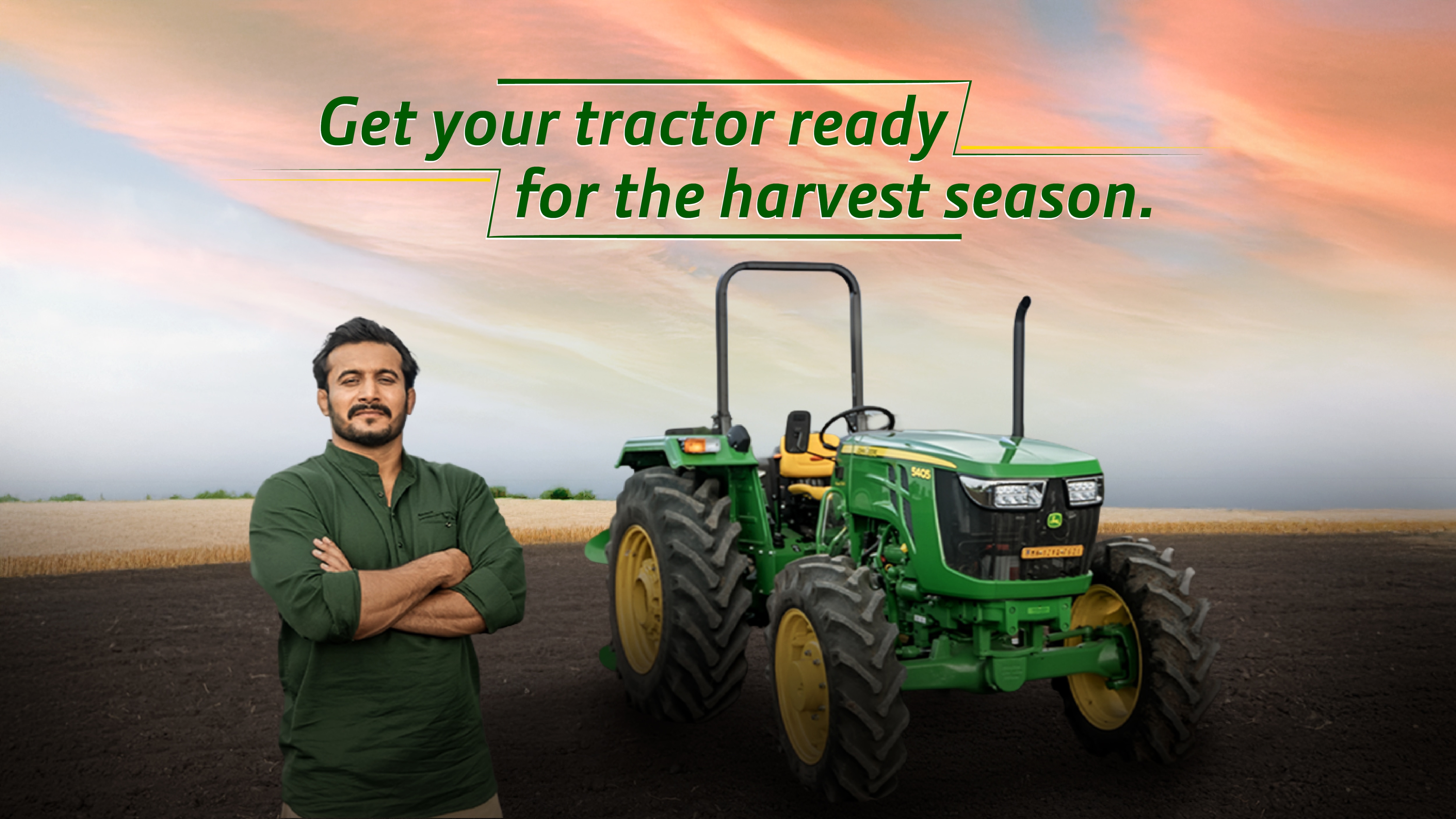
Harvest season is one of the most demanding periods in the farming calendar. Every machine in the field needs to perform at its best, especially your tractor. A reliable tractor not only ensures smooth harvesting operations but also helps avoid unexpected downtime when every hour in the field matters.
A John Deere tractor is designed for durability, efficiency and performance across diverse Indian farming conditions. However, even the most advanced machines require regular tractor maintenance and timely tractor service to deliver consistent results. Preparing your tractor before the harvest season is an essential step to keep operations running smoothly and protect your productivity.
Below is a practical tractor maintenance checklist before harvest that can help farmers keep their machines in top working condition.
Perform a Complete Visual Inspection
The first step in preventive tractor maintenance is a simple but thorough inspection. Walk around your tractor and check for visible issues before starting the engine.
Look for oil leaks, loose bolts, damaged hoses or worn components. Inspect tyres for cuts, cracks or uneven wear. Make sure all lights, indicators and safety reflectors are functioning properly, especially if your tractor will be used on roads or during early morning and late evening operations.
A quick daily inspection can prevent small issues from becoming major problems later in the field.
Check and Change Engine Oil
Your tractor’s engine is the core of its performance. Regular tractor engine maintenance is essential to ensure smooth operation during the demanding harvest season.
Check the engine oil level and ensure it is within the recommended range. If the oil appears dirty or if the service interval has been reached, replace it before the season begins. Clean oil helps reduce friction between engine components and improves overall engine life.
Using manufacturer-recommended lubricants and following the service schedule helps maintain optimal performance and efficiency.
Inspect the Air Filter
Harvest season often means working in dusty conditions, which can affect engine performance if the air filtration system is not properly maintained.
Remove the air filter and inspect it for dust accumulation or blockages. Clean or replace the filter if necessary. A clean air filter allows proper airflow into the engine, improving combustion efficiency and fuel economy.
Ignoring this step may lead to reduced power, increased fuel consumption and unnecessary engine strain.
Check the Cooling System
Long hours in the field can cause the engine to heat up quickly, especially during peak harvesting operations. A well-maintained cooling system ensures the engine stays within safe operating temperatures.
Inspect the radiator for dust, crop residue or mud buildup and clean it thoroughly. Check coolant levels and top up if required. Also, examine radiator hoses for cracks or leaks.
Maintaining the cooling system helps prevent overheating and ensures uninterrupted harvesting operations.
Examine the Transmission and Clutch
The transmission system experiences significant load during harvesting, particularly when pulling trailers or operating heavy implements.
Check the transmission oil level and inspect for any unusual noise or difficulty while shifting gears. Ensure the clutch is functioning smoothly and not slipping.
Proper tractor servicing tips recommend addressing transmission issues early, as delays may lead to costly repairs and operational downtime during peak farm activity.
Inspect the Hydraulic System and PTO
The hydraulic system and Power Take-Off (PTO) play a vital role in operating implements such as balers, trailers and other harvest equipment.
Inspect hydraulic hoses and connections for leaks or damage. Check hydraulic oil levels and replace filters if required. Also, ensure the PTO shaft rotates smoothly and is properly lubricated.
Well-maintained hydraulics ensure implements respond quickly and operate efficiently during harvest work.
Check Battery and Electrical Components
Electrical systems are often overlooked until problems occur. Before the harvest season begins, inspect the tractor battery and electrical wiring.
Clean battery terminals to remove corrosion and ensure the connections are secure. If your battery requires water, check the electrolyte levels and refill accordingly.
Also test the ignition system, headlights and dashboard indicators to ensure everything is functioning properly.
Inspect Tyres and Wheel Alignment
Tyres play a crucial role in field traction and fuel efficiency. Poor tyre condition can reduce field performance and increase fuel consumption.
Check tyre pressure and adjust it according to manufacturer recommendations. Inspect tread depth and look for signs of uneven wear or damage.
Proper tyre maintenance not only improves traction in the field but also enhances overall tractor stability and safety.
Schedule Professional Tractor Service
While basic inspections can be performed by operators, professional tractor service from authorised technicians ensures deeper diagnostics and preventive maintenance.
John Deere offers strong product support through its network of trained dealers and technicians who provide expert servicing, repairs and genuine replacement parts. Regular servicing helps reduce breakdowns, lower repair costs and maintain long-term equipment value.
Scheduling a pre-harvest inspection with an authorised service centre ensures your tractor is fully prepared for the demanding workload ahead.
Use Genuine Parts and Follow Service Schedules
Using genuine components during repairs and maintenance ensures compatibility and reliability. Genuine parts are designed to match the specifications of your tractor and help maintain performance over time.
Following recommended service intervals based on engine hours also helps prevent unexpected mechanical failures and keeps your equipment working efficiently throughout the season.
Conclusion
Harvest season leaves little room for machine downtime. A well-maintained tractor allows farmers to complete operations efficiently, protect crop quality and maximise productivity.
By following a proper tractor maintenance checklist and performing timely tractor service, farmers can ensure their John Deere tractor remains reliable during one of the most critical stages of the agricultural cycle.
Preventive farm tractor maintenance is not just about avoiding breakdowns. It is about ensuring that every field operation is completed on time, every harvest is protected and every season delivers the results farmers work hard for.